The $1 Trillion Question: Is India's Export Ambition on Track?
Mar 5, 2026
When India set its sights on $2 trillion in total exports by 2030 — $1 trillion in merchandise and $1 trillion in services — it was an ambitious target for a country that had only just crossed $450 billion in combined exports. Five years on, with 2030 four years away, the picture is one of real progress, genuine resilience, and a new set of headwinds that India is actively working to overcome.
The story of India's export ambition in 2026 is not a simple one. It is a story of a country that hit record export figures, absorbed a severe external shock, adapted faster than most expected, and is now recalibrating its strategy for a more fragmented and protectionist world. The $1 trillion target remains within reach — but the path has changed.
Where India Stands Today
India's total exports reached a record $824.9 billion in FY2024–25 — merchandise at $434 billion and services at $387.5 billion. That is a significant milestone, and it places India within striking distance of the $2 trillion target, provided growth momentum is sustained. The Commerce Secretary has projected that total goods and services exports will cross $860 billion in FY2025–26. At that pace, India would need to sustain annual growth of around 12% in merchandise and 16–17% in services to hit the $2 trillion mark by 2030.
Services exports are the stronger story. India's IT, software, and business process sectors continue to grow at double-digit rates, and the services trade surplus provides a consistent buffer against merchandise volatility. The $1 trillion services export target, once considered bold, is now widely regarded as achievable — possibly ahead of schedule.
Merchandise exports are the more complex picture — and the more consequential one for India's industrial ambitions. Goods exports have grown, but the composition and the context have shifted significantly in the past year. Electronics exports surged nearly 26% in mid-2025, reflecting the depth India is building in high-value manufacturing. Pharmaceuticals, petroleum products, and engineering goods all recorded healthy growth. But the tariff shock from the United States — India's single largest export destination, accounting for nearly 20% of total merchandise exports — has introduced a serious near-term headwind.
The Trump Tariff Test — And India's Response
In August 2025, the United States imposed 50% tariffs on most Indian goods — combining a 25% reciprocal tariff with an additional 25% penalty linked to India's energy procurement choices. The impact was immediate: Indian exports to the US fell sharply across textiles, gems and jewellery, engineering goods, and chemicals. At their lowest point in September 2025, US-bound shipments had declined by nearly 28%.
For a country targeting $1 trillion in merchandise exports, losing competitiveness in its largest single export market is a material challenge. Sectors like textiles — which directly employ 45 million workers — and gems and jewellery, where roughly a third of exports were US-bound, have faced significant disruption. Goldman Sachs estimated the tariffs could reduce India's GDP growth by up to 0.6 percentage points.
But the headline numbers tell only part of the story. India's response to the tariff shock has been both swift and strategically significant. The government approved a ₹45,060 crore ($5.2 billion) export support package in November 2025, including an Export Promotion Mission and credit guarantee schemes for MSMEs. By November 2025, India's overall merchandise exports had rebounded to $38.13 billion — up 19.4% year-on-year — as exporters pivoted aggressively to new markets.
The India-UK Free Trade Agreement, signed in July 2025, grants zero-duty access on 99% of Indian exports. Exports to Germany, the UAE, Brazil, and 21 other markets grew substantially in the second half of 2025, even as US-bound shipments contracted. The seafood industry pivoted toward Vietnam and Belgium. Chemical exporters deepened their footprint in Europe. Engineering goods firms are targeting infrastructure projects across Africa and the Middle East.
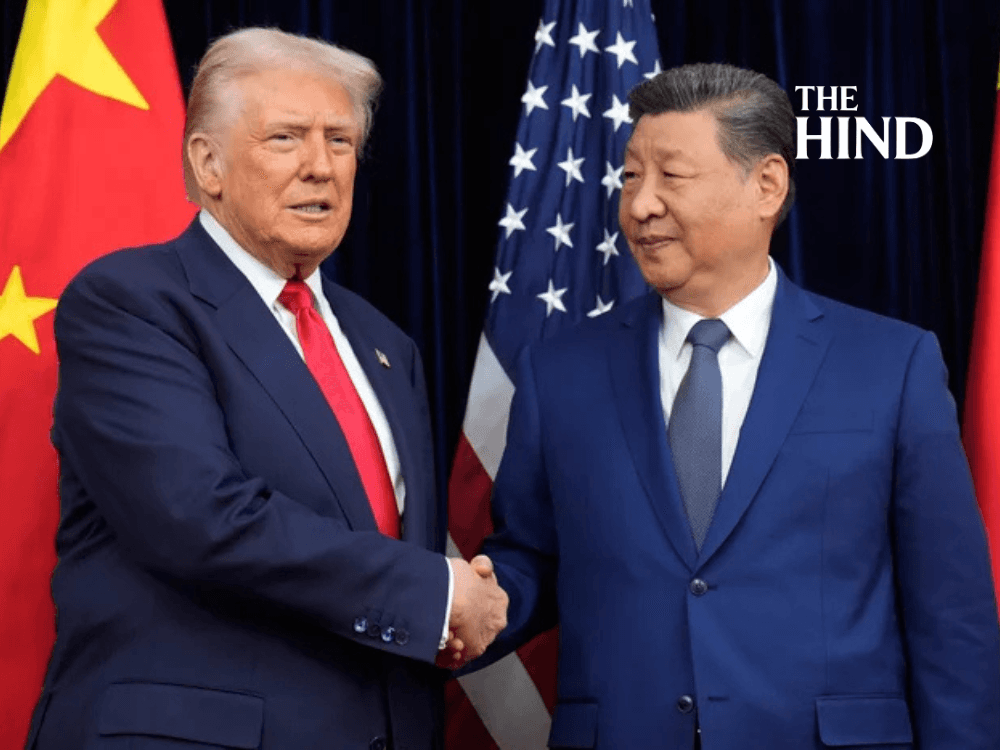
The bilateral situation with the United States has also improved. An interim trade arrangement effective February 2026 reduced the penal tariff component, with the US cutting reciprocal tariffs on most Indian goods from 50% to 18%. A fuller bilateral trade deal is under negotiation, with Trump's April 2026 visit to China expected to clarify the broader geopolitical context within which US-India trade relations sit. India's pharmaceutical exports to the US — worth over $13 billion annually and a critical input for the American generic drug market — remain exempt from tariffs entirely, a reflection of the strategic interdependence that anchors the bilateral relationship.
The Path to $1 Trillion — Sectors That Will Define It
India's export ambition will ultimately be decided in four sectors: electronics, pharmaceuticals, engineering goods, and services.
Electronics is the most exciting frontier. Smartphone exports have become India's fifth-largest export commodity, and the PLI scheme for IT hardware — with Dell, HP, Lenovo, Asus, and Acer all participating — is beginning to yield results. As global companies accelerate their China+1 strategies, India's electronics manufacturing ecosystem is deepening rapidly. The $1 trillion merchandise target may increasingly depend on how quickly India can scale from assembly to full-stack electronics manufacturing.
Pharmaceuticals are a bedrock. India supplies nearly 50% of the US generic drug market and is a critical source of affordable medicines globally. This is a sector where India has genuine comparative advantage — and one that has been deliberately protected from tariff disruption in the current US-India negotiations.
Engineering goods and green energy products represent the emerging frontier. India's renewable energy manufacturing capacity — now the third-largest solar capacity globally — is creating a new export category. The PLI schemes for solar panels, advanced chemistry cells, and speciality chemicals are building export pipelines that did not exist five years ago.
Services remain the anchor. India's GCCs — Global Capability Centres — are powering global corporations across AI, analytics, and digital transformation. With over 1,700 GCCs operational and new centres being added every month, India's services export engine is structurally strong and relatively insulated from merchandise trade disruptions.
On Track — With Conditions
The honest assessment is this: India's $1 trillion merchandise export target by 2030 is achievable, but it is no longer on autopilot. The conditions that will determine success are clear.
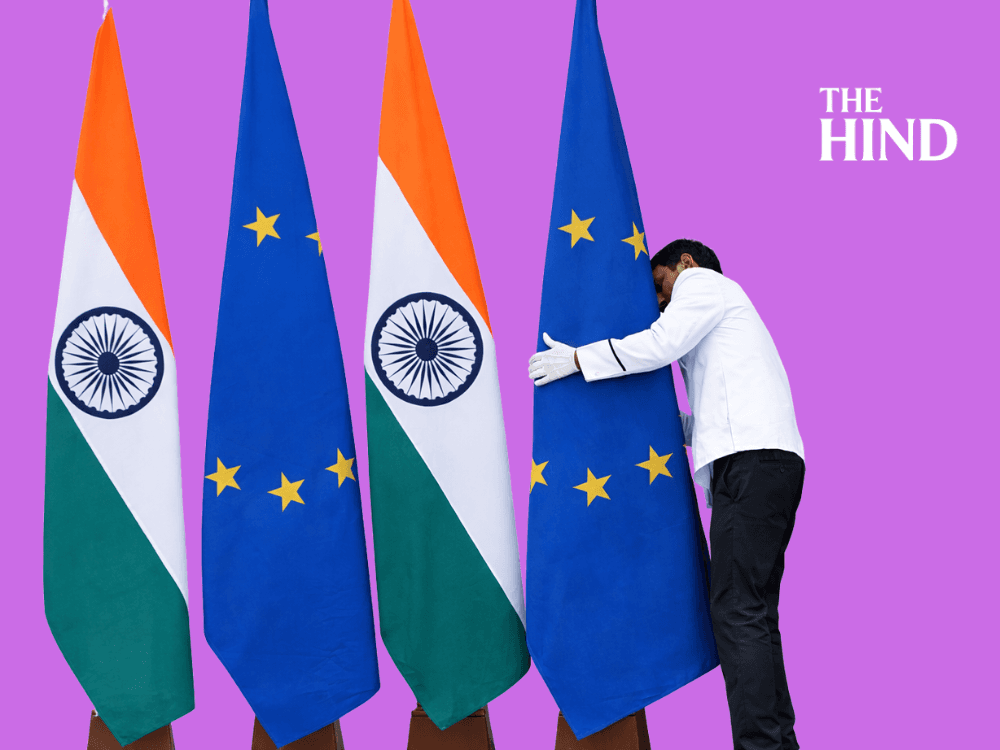
Market diversification must accelerate. India cannot afford to remain 20% dependent on any single export destination. The UK FTA is a start; the EU FTA negotiation must close, and India's presence in African and Southeast Asian markets must deepen. India's e-commerce exports, at $2 billion, are a fraction of China's $350 billion — this gap represents one of the largest untapped opportunities in India's export economy.
Infrastructure must keep pace with ambition. The Commerce Ministry's ADB-supported study on port, airport, and logistics capacity for a $2.5 trillion trade economy is the right exercise — and its findings must translate into capital allocation, not just reports.
The MSME gap must be addressed. Seventy percent of India's exports originate from just 70 of its 760-odd districts. Unlocking the interior — through e-commerce, logistics connectivity, and export promotion workshops — is not a marginal exercise. It is central to whether India hits $1 trillion or falls short.
India has absorbed a significant external shock and adapted with speed and ingenuity. The $1 trillion target is not in jeopardy — but sustaining the growth rate required to reach it demands that India continues to execute at the pace and scale the ambition demands.
The Hind covers policy, power, and strategic affairs from India's perspective. Views expressed are analytical and editorial.
Type something …
Search
Latest Post

Iran's new Supreme Leader has been chosen in a wartime succession driven by the IRGC — not a clerica...
Mar 5, 2026