What Mojtaba Iran's New Supreme Leader Means for India
Mar 5, 2026
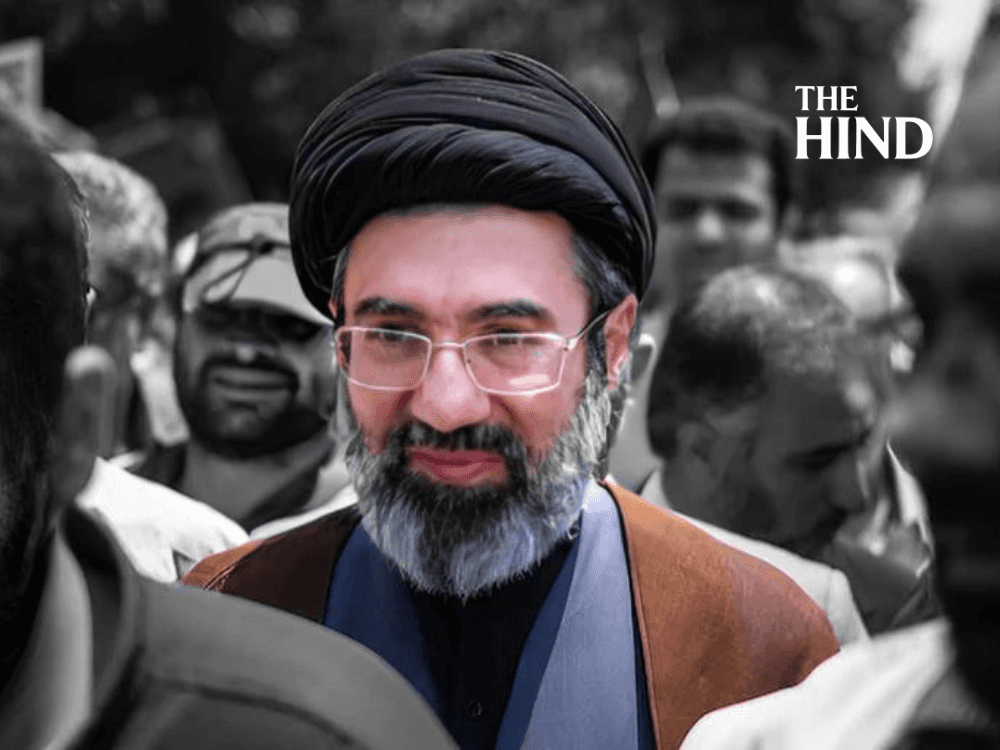
On February 28, 2026, Ayatollah Ali Khamenei — Supreme Leader of Iran for 36 years, the longest-serving head of state in the Middle East — was killed in joint US-Israeli airstrikes on Tehran. His death, confirmed by Iran's Supreme National Security Council the following day, triggered one of the most consequential succession decisions in the modern Middle East. By March 3, according to multiple sources cited by Iran International, the Assembly of Experts — under intense pressure from the Islamic Revolutionary Guard Corps — had selected Mojtaba Khamenei, the late leader's 56-year-old son, as the third Supreme Leader of the Islamic Republic.
This is not a routine succession. It is a wartime decision, shaped by a security state under siege, constitutionally irregular in its speed, and deeply consequential for every country with stakes in the Middle East — including India. For New Delhi, which has spent decades carefully managing its relationship with Tehran across energy, connectivity, and strategic depth, the arrival of a new Supreme Leader amid an active war demands careful analysis and proactive diplomacy.
Who Is Mojtaba Khamenei
Mojtaba Khamenei has spent his adult life operating almost entirely in the shadows. He has never held a senior formal government post. He has never given a public lecture, delivered a Friday sermon, or addressed the Iranian people directly — to the point where many Iranians have reportedly never heard his voice. Yet for at least two decades, he has effectively run the Beit — the Supreme Leader's office — functioning as his father's closest confidant, gatekeeper, and operational link to the IRGC's command networks.
His background is deeply militarised. He served in the Habib Battalion of the IRGC during the Iran-Iraq War of the 1980s, building relationships with commanders who went on to lead the security and intelligence apparatus of the Islamic Republic. He studied under the hard-line cleric Ayatollah Taqi Mesbah Yazdi and has, according to multiple opposition and Western sources, been linked to the orchestration of crackdowns on Iranian protesters — most notably during the 2009 Green Movement. He is under US and Western sanctions and has been linked, through intermediaries, to significant financial networks inside the regime's economic structure.
The IRGC's decision to back Mojtaba — reportedly overriding constitutional procedure in the urgency of a wartime succession — reflects a straightforward institutional calculus. The Guards needed a leader who would keep the chain of command intact, prevent factional splits at the top, and give the security apparatus the legitimacy to continue operating under sustained external attack. Mojtaba, with his decades of IRGC relationships and his role as custodian of his father's office, offered exactly that combination. As Iran International's analysis put it: this appointment is the security state protecting itself.
What a Mojtaba-Led Iran Means Strategically
The most important question for India is whether Mojtaba's Iran will be substantively different from his father's — and specifically, whether the new leadership will move toward de-escalation or continue the conflict's current trajectory.
The honest answer is that Mojtaba faces a genuine strategic fork. Iran under sustained US-Israeli attack, with its nuclear infrastructure degraded, its IRGC command partially disrupted, and its energy exports choked by the Hormuz crisis, is a weakened state. The rational strategic choice — a negotiated ceasefire in exchange for sanctions relief and reconstruction assistance — is visible. But the political dynamics of a wartime succession make rationality difficult. Mojtaba carries the weight of his father's death at American and Israeli hands. Any deal with Trump — who, as Iran International noted, now carries "not only Soleimani's blood, but also Ali Khamenei's" — is extraordinarily difficult to sell domestically as anything other than capitulation.
Mojtaba's unique position is that he can present himself as the person entitled to make that choice. If Iran chooses de-escalation, he can frame it as the family's decision — a sovereign choice, not a defeat imposed from outside. If Iran chooses continued resistance, he can frame it as continuity and retaliation. This dual positioning is precisely why the IRGC backed him: he is the only figure who can credibly own either outcome.
For India, both paths carry significant implications. A Mojtaba-led Iran that moves toward a ceasefire and eventual sanctions relief would be a more accessible partner — potentially reopening Hormuz, reviving energy trade, and creating conditions for the Chabahar connectivity project to resume full operations. A Mojtaba-led Iran that chooses escalation and continued confrontation would deepen the energy crisis, extend the Hormuz disruption, and place India's Chabahar investment in an increasingly uncertain environment.
India's Stake in Tehran's New Leadership
India's relationship with Iran is built on three pillars that remain strategically vital regardless of who sits in Tehran.
The first is energy. Iran holds the world's second-largest natural gas reserves and significant oil reserves. India, which imports 85% of its crude and is navigating a severe energy cost shock from the current conflict, has a long-term interest in Iran as a supplier once sanctions and conflict conditions allow. The relationship built over decades — from the ONGC Videsh investment in the Farzad-B gas field to the broader oil import relationship — is dormant under current conditions but structurally valuable for India's long-term energy security planning.
The second is Chabahar. India's 10-year contract to operate the Shahid Beheshti port terminal is not just an infrastructure project — it is India's primary foothold in a connectivity corridor that bypasses Pakistan, reaches Afghanistan, and opens Central Asia. The entire logic of Chabahar depends on a stable, functional, and cooperative Iranian state. A Mojtaba-led Iran that is consumed by war, internal instability, and IRGC dominance is a less reliable Chabahar partner than the reformist-leaning government India had been working with under President Pezeshkian.
The third is regional balance. India has a deep interest in a West Asia that is neither dominated by any single power nor consumed by a sectarian conflict that could destabilise the Gulf, threaten India's diaspora of over 10 million, and disrupt the shipping lanes through which India's trade flows. A stable Iran — even one with which India has managed, rather than warm, relations — is preferable to a collapsed, fragmented, or radicalised one. India must engage Mojtaba's Iran with this calculus clearly in mind.
What India Must Do Now
India's immediate diplomatic task is to establish working contact with the new Iranian leadership without delay. Prime Minister Modi's phone call to President Pezeshkian during the conflict's early days was a start — but Pezeshkian, under the new dispensation, holds limited power relative to the Beit and the IRGC. India needs channels into the new Supreme Leader's office, and it should be building those channels now — through its embassy in Tehran, through trusted intermediaries in Oman and Qatar, and through its own Iranian interlocutors.
India should also be clear in its diplomatic messaging: New Delhi supports a ceasefire, the reopening of Hormuz, and Iran's territorial integrity. It does not endorse external regime change. This is not sentiment — it is India's national interest, plainly stated. A message of consistent, principled engagement from India's largest democracy, delivered to Tehran's new leadership without conditions or demands, carries diplomatic weight that few other countries can replicate.
The arrival of Mojtaba Khamenei as Iran's Supreme Leader is, in one sense, the worst possible timing — a new, untested leader, backed by a militarised security state, taking power in the middle of an active war with two nuclear-armed states. But history rarely offers convenient timing. India's ability to maintain working relations with Tehran through this transition — protecting Chabahar, advocating for ceasefire, and keeping the energy and connectivity corridors of the future in view — is a test of the patient, interest-driven diplomacy that has always been New Delhi's greatest strategic asset.
The Hind covers policy, power, and strategic affairs from India's perspective. Views expressed are analytical and editorial.
Type something …
Search
Latest Post
Iran's new Supreme Leader has been chosen in a wartime succession driven by the IRGC — not a clerica...
Mar 5, 2026