Steel Soldiers: India's Push Towards an Autonomous Army

Mar 5, 2026
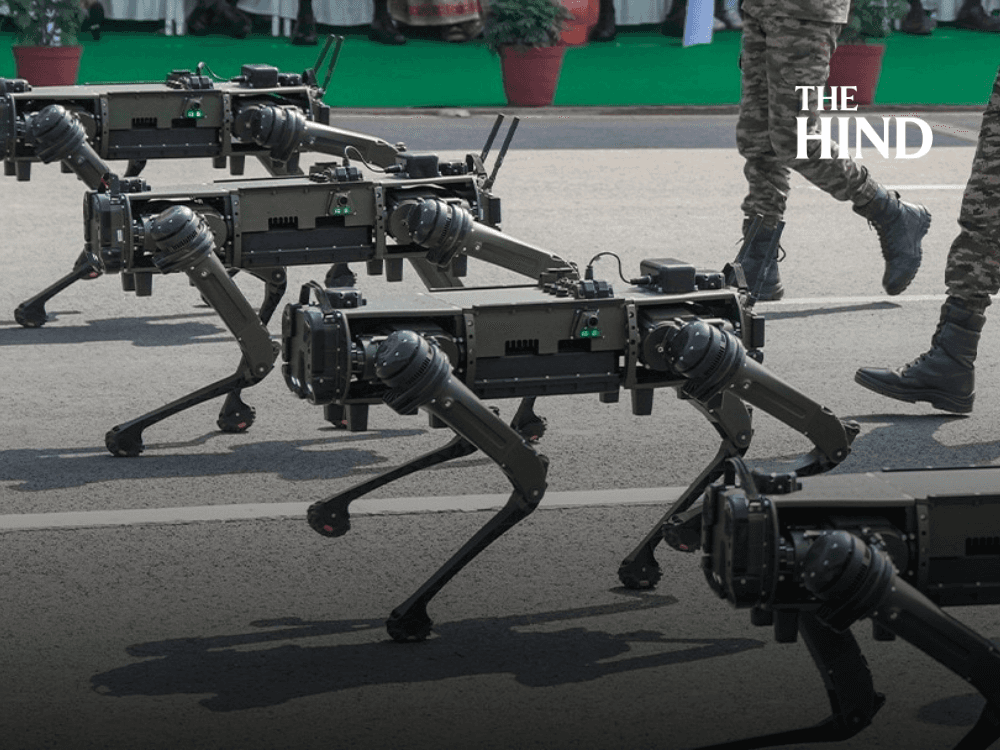
When "Sanjay" — India's robotic dog — marched in the Republic Day parade in Kolkata, it was more than a display of technological novelty. It was a statement of intent. Classified as a Multi Utility Legged Equipment (MULE), Sanjay is built for all-weather, all-terrain operations — detecting explosives, conducting surveillance, patrolling perimeters, and functioning in chemical, biological, radiological, and nuclear warfare zones. With over 100 units already inducted into various Army formations, the robotic dog is the most visible symbol of a much deeper transformation underway across India's armed forces.
India is building an autonomous military — not as a futuristic aspiration, but as an active strategic programme with a defined roadmap, institutional architecture, and real battlefield experience. The lessons of Operation Sindoor in May 2025, Ukraine's drone war, and the current Iran conflict have converged to accelerate that programme with a sense of urgency that was not present even two years ago.
From Concept to Battlefield
India's journey toward autonomous military systems began in earnest with the Defence AI Council and the Defence AI Project Agency, both established in 2022. At the inaugural AI in Defence symposium that year, Defence Minister Rajnath Singh launched 75 AI-based defence products in a single day — autonomous vehicles, predictive maintenance systems, AI-enabled surveillance, speech recognition tools — developed jointly by DRDO, Defence PSUs, startups, and academia. That event was a signal that India was not merely experimenting with military AI. It was institutionalising it.
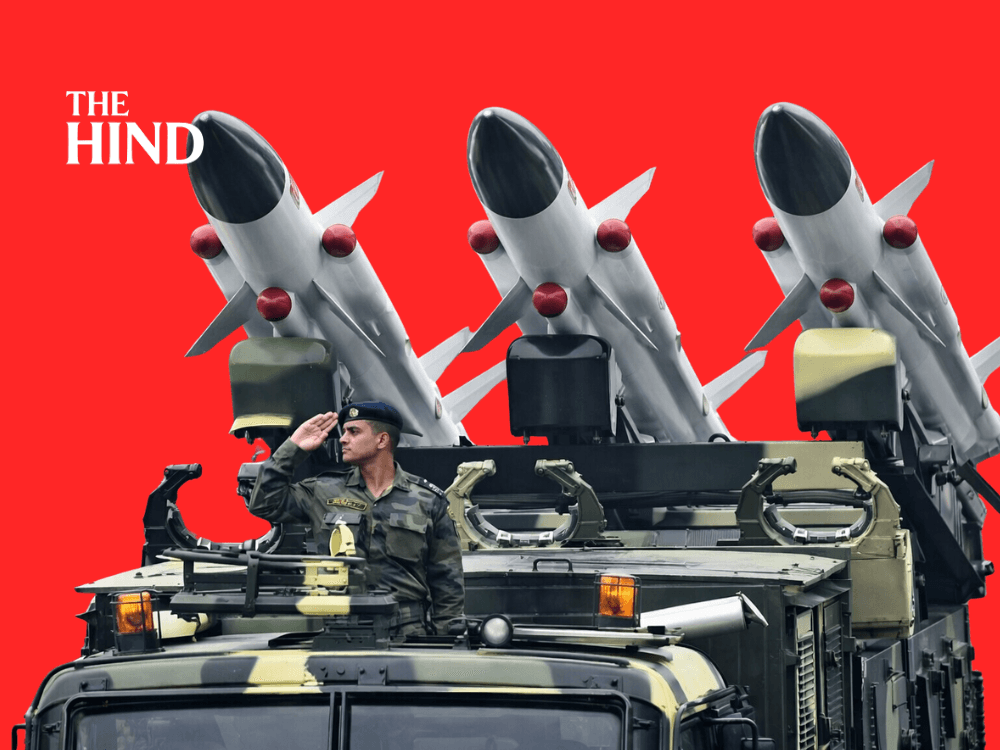
Operation Sindoor was the crucible. India's cross-border strike in May 2025 on terror infrastructure in Pakistan and PoK tested autonomous and AI-enabled systems under real operational conditions for the first time. The Akashteer air defence management system integrated sensor feeds from drones, satellites, radar, and ground systems into a single, real-time operational picture — and performed. The operation demonstrated that AI-enabled battlefield awareness is not a laboratory concept for India. It is operational reality.
Following Sindoor, the Indian Army accelerated its AI roadmap for 2026–27. Key priorities include drone swarming operations, combat simulation for training, real-time intelligence surveillance and reconnaissance, and predictive maintenance for equipment. The roadmap also calls for embedding AI requirements into all new defence procurement specifications — ensuring that every future weapons system is AI-ready from conception, not retrofitted as an afterthought. Large language model-based text summarisers, AI chatbots for intelligence processing, and facial recognition for security are being deployed to streamline operational and logistics functions across commands.
The Robotic Ecosystem India Is Building
India's autonomous military is being constructed on three parallel tracks — ground, aerial, and maritime — each with distinct requirements and timelines.
On the ground, the robotic dog programme is the most mature. Svaya Robotics, developed in collaboration with DRDO, introduced India's first indigenously built quadrupedal robot in 2023. AeroArc's MULE quadrupeds — weighing 51 kg, carrying 12 kg payloads, with up to 20 hours of battery life and AI-driven cameras, LiDAR, and thermal sensors — are built for the kind of rugged, high-altitude terrain India's borders demand. These platforms operate in temperatures ranging from -30°C to 55°C, autonomously or via remote control, and are designed to keep soldiers out of harm's way in scenarios that have historically cost lives — minefields, forward patrols, CBRN zones.
Beyond the quadrupeds, DRDO's Centre for Artificial Intelligence and Robotics (CAIR) in Bengaluru is developing Unmanned Ground Vehicles (UGVs) for logistics, surveillance, and eventually combat support roles. The Army is also working on Manned-Unmanned Teaming (MUM-T) solutions — configurations where a crewed platform and an autonomous wingman operate in coordinated tandem, sharing sensor data and splitting operational roles. This is the same architecture the US Army has been testing through its Project Convergence exercises, and the lessons from those programmes are being studied carefully by Indian planners.
DRDO has also unveiled an ambitious longer-term vision: a humanoid robot army capable of carrying firearms and operating under human command in high-risk scenarios. The concept is not replacement of soldiers but augmentation — robots taking on the most dangerous frontline tasks while human commanders retain strategic and ethical control. This is still years from deployment, but the institutional commitment is real.
On the aerial front, drone swarm technology is the priority. India's AI Offensive Drone Operations Project — incubated by the Army — is developing coordinated swarm architectures where dozens of autonomous drones execute collective tasks: area domination, suppression of enemy air defences, precision strikes, and ISR. The Iran conflict, where cheap drone swarms have overwhelmed billion-dollar air defence systems, has given this programme a new urgency.
The China Factor — And Why India Must Move Faster
India's autonomous military programme does not exist in a vacuum. China is simultaneously assembling its own robot army with the full resources of the world's second-largest economy and the PLA's military-civil fusion doctrine. The PLA is developing wingman drones, robotic ground forces, AI-optimised logistics, and cognitive warfare capabilities — using AI-driven psychological operations and social media manipulation alongside physical autonomous systems. China has also deployed its own quadrupedal robots along disputed border areas, directly mirroring India's own deployments in the same terrain.
The border competition in autonomous systems is already underway. India's robotic dogs are operating in the same high-altitude zones where China has deployed its equivalent platforms. This is not a metaphor for future competition — it is the present reality. And it underscores why India's $50 million annual AI defence investment, while a start, must scale significantly if India is to maintain meaningful parity in this domain.
The good news is that India has structural advantages that money alone cannot buy. Its deep IT talent pool, its thriving defence startup ecosystem, its IIT and IISc research base, and its growing experience of real operational conditions — from Kargil terrain to the Indian Ocean — give India a learning environment that is genuinely world-class. Companies like Ammunic Systems, AeroArc, and Svaya Robotics are building capabilities that would have required state-owned enterprises a generation ago. The defence startup ecosystem is a force multiplier that India should continue to leverage through iDEX, the Defence Innovation Organisation, and procurement fast-tracks for proven indigenous systems.
The Doctrine India Needs
Technology without doctrine is hardware without purpose. As India's autonomous military capability matures, the doctrinal framework governing its use must keep pace.
The Joint Doctrine for Cyberspace Operations, released by the Chief of Defence Staff in 2024, was an important step in integrating cyber and autonomous capabilities into joint warfighting doctrine. The next requirement is a dedicated Autonomous Systems Doctrine — one that addresses rules of engagement for AI-enabled systems, human-in-the-loop requirements for lethal autonomous decisions, command responsibility in MUM-T configurations, and the legal framework governing autonomous action under Indian and international law.
India's armed forces have demonstrated — in Operation Sindoor and in the ongoing monitoring of the Iran conflict — that they understand the operational utility of autonomous systems. What remains to be fully articulated is the strategic and ethical framework within which those systems will operate. Getting that doctrine right, early, will matter enormously — both for India's operational effectiveness and for its standing as a responsible military power in an era of autonomous warfare.
The steel soldiers are coming. India is building them with intent, with urgency, and with the operational experience to know exactly what they need to do.
The Hind covers policy, power, and strategic affairs from India's perspective. Views expressed are analytical and editorial.
Type something …
Search
Latest Post

Iran's new Supreme Leader has been chosen in a wartime succession driven by the IRGC — not a clerica...
Mar 5, 2026