When Trump Meets Xi: What the Beijing Summit 2026 Means for India

Mar 5, 2026
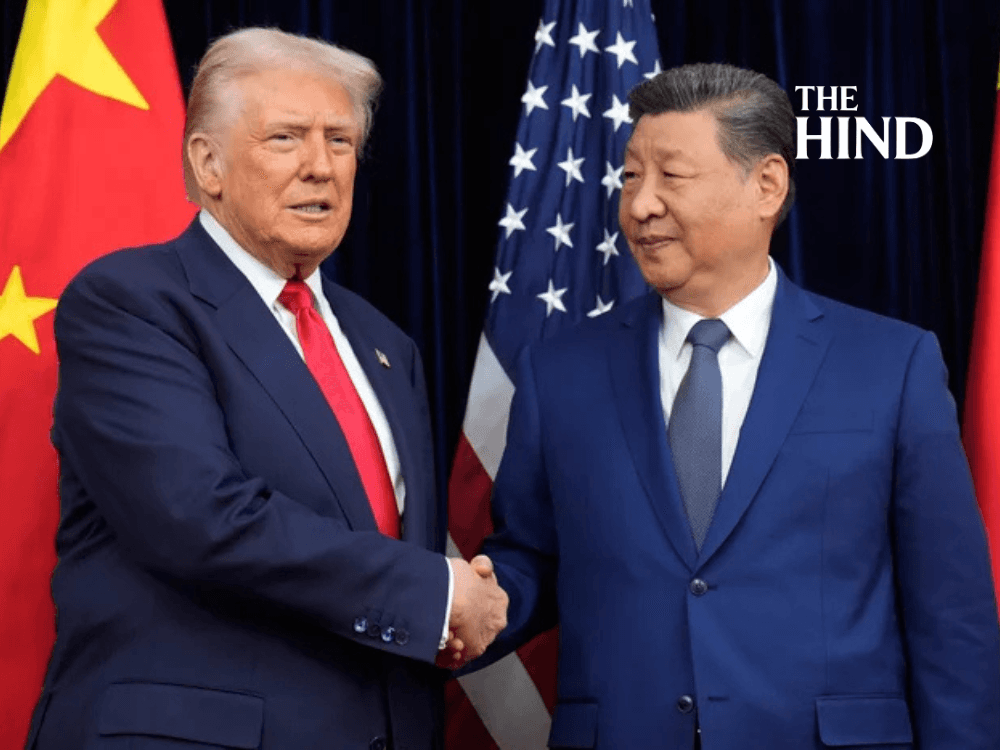
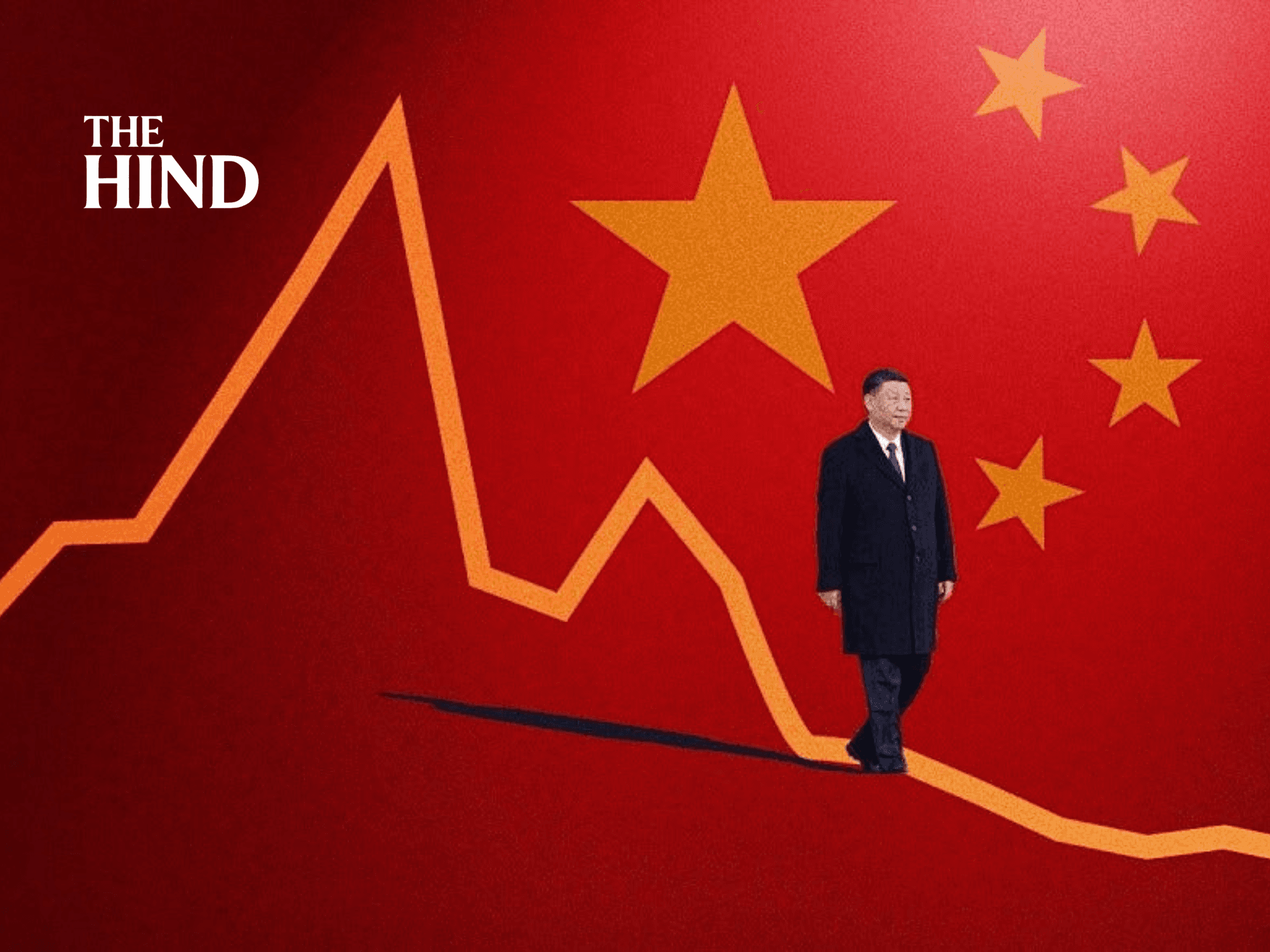
On March 31, Donald Trump will board Air Force One for Beijing — the first visit by a sitting US president to China since Trump's own trip in 2017. The three-day summit, running through April 2, will be the most consequential bilateral meeting of the year. Trade, Taiwan, Iran, rare earths, and the broader architecture of US-China relations are all on the table. And India, though not present in the room, has as much at stake in the outcome as any country on earth.
For New Delhi, the Trump-Xi summit is not a spectator event. It is a moment that will clarify — or complicate — the strategic environment India must navigate for the next several years. The outcomes of Beijing will shape the terms of the US-India bilateral trade negotiation, the depth of the US commitment to the Quad, the strategic calculus on Taiwan, and the degree to which Washington treats New Delhi as an indispensable partner rather than a convenient one. India must read this summit carefully — and position itself accordingly.
What Beijing Is Seeking
China has been strategically managing the Trump relationship since April 2025 — winning concessions on tariffs, locking in a pre-scheduled summit calendar, and using its leverage over rare earth exports and soybean purchases to keep Washington engaged and reactive rather than strategically coherent. The October 2025 meeting in Busan, South Korea, which Trump rated a "12 out of 10," resulted in tariff rollbacks, suspension of export controls, and a framework trade deal. Beijing scripted that outcome — and it is scripting the April summit too.
China's asks in Beijing are well-understood. Taiwan remains, in Beijing's own words, "the most important issue" in the relationship. Xi has already told Trump that "Taiwan's return to China is an integral part of the post-war international order" — a framing designed to extract, at minimum, a softening of US arms sales commitments to Taipei. On trade, Beijing will push for the removal of the remaining 10% fentanyl-related tariffs, which analysts expect Trump to concede as the "headline victory" of the summit. On Iran, China — as the largest buyer of Iranian oil — will seek to insulate its energy relationships from further US pressure, while appearing cooperative on de-escalation.
The US Supreme Court's recent ruling striking down Trump's IEEPA-based tariffs has significantly weakened Washington's negotiating hand. Trump arrives in Beijing with fewer economic pressure points than he had six months ago, and China's strategic planners know it. Beijing has been "stringing along the Trump White House" — as one regional analyst put it — winning concession after concession while giving measured, reversible commitments in return. The April summit is the next chapter in that playbook.
What It Means for India — The Trade Dimension
The most immediate implication for India is on trade. The US-India bilateral trade negotiation is proceeding in parallel with the US-China summit — and the two are not independent of each other.
If Trump secures a major trade package with China in April — including tariff reductions, expanded Chinese purchases of US goods, and technology access agreements — it reduces Washington's urgency to finalise a deal with India. India has been counting on its status as the preferred alternative to China in US supply chain strategy to give it leverage in trade negotiations, particularly on the 50% tariffs imposed on Indian goods in August 2025. A US-China rapprochement that stabilises trade flows between the two largest economies could reduce the strategic premium Washington places on the India relationship — at least in the short term.
Conversely, if the Beijing summit produces only partial results — as the October Busan meeting did — India's positioning as a stable, rules-based, democratic alternative to China-dependent supply chains becomes more valuable. The "China+1" imperative deepens when US-China relations remain structurally uncertain. India's interest is not in a US-China cold war — the global economic disruption of that scenario hurts India too. But India does have an interest in ensuring that any US-China accommodation does not come at the cost of India's strategic leverage in Washington.
The Quad Dimension
The Trump-Xi summit also carries significant implications for the Quad — the strategic grouping of India, the United States, Japan, and Australia that has emerged as the primary institutional framework for a free and open Indo-Pacific. Trump's enthusiasm for multilateral security frameworks has been episodic at best. His transactional instincts mean that Quad commitments are always susceptible to being traded for bilateral gains elsewhere.
A warm Beijing summit risks giving China exactly what it has sought since the Quad's revival — a narrative that US commitments to Indo-Pacific partners are negotiable, that Washington's strategic attention is ultimately bilateral and transactional, and that smaller powers should hedge accordingly. India's neighbourhood is watching. If the Trump-Xi summit produces signals that the US is deprioritising its Indo-Pacific security commitments in exchange for trade wins with Beijing, the strategic credibility of the Quad framework — and India's own positioning within it — is complicated.
India's response must be to ensure that its bilateral relationship with Washington is substantive and active in the weeks leading up to and immediately following the Beijing summit. The recently concluded interim trade arrangement — which reduced US tariffs on Indian goods from 50% to 18% — is a foundation. Building on it with a fuller bilateral deal, deepening the iCET technology partnership, and advancing the defence industrial cooperation that has been a hallmark of recent India-US engagement will all serve to anchor Washington's attention on New Delhi regardless of what happens in Beijing.
The Iran Variable
The Iran conflict adds a third dimension to the Trump-Xi summit that is directly relevant to India. China is the largest buyer of Iranian oil, and the US-Israel strikes on Iran have disrupted those energy flows at a time when Beijing is already managing a significant energy crunch — a factor that features prominently in China's lowered growth target for 2026. Trump and Xi are expected to discuss Iran directly, with Washington seeking Chinese cooperation on pressuring Tehran toward a ceasefire or political settlement, and Beijing seeking to protect its energy relationships and avoid further escalation in a region where it has significant economic stakes.
For India, the Iran dimension of the Trump-Xi summit creates both risk and opportunity. If the US and China find a framework for managing the Iran crisis jointly — coordinating pressure on Tehran in exchange for Chinese cooperation on de-escalation — India, which has been urging all parties toward restraint, finds its own diplomatic role somewhat pre-empted by a great-power arrangement. But if the summit fails to produce a coherent Iran framework, India's unique positioning — with relationships in Washington, Tehran, Riyadh, and Moscow — becomes more valuable as a potential interlocutor.
India should use the pre-summit period to make its Iran interests clear to both Washington and Beijing: a ceasefire that reopens the Strait of Hormuz, protects Gulf stability, and preserves India's Chabahar investment and connectivity corridor. These are interests that align partially with both the US and Chinese positions — and India's ability to articulate them clearly gives it a seat at the diplomatic table even in a room it is not physically in.
India's Posture — Active, Not Passive
The worst outcome for India from the Trump-Xi summit would be a sweeping US-China accommodation that reduces strategic space for third parties — a G2 framework in which Washington and Beijing manage the global order bilaterally, leaving India and others to adjust to decisions made without them. That outcome is unlikely, given the structural tensions between the two powers. But the risk of a partial version of it — a transactional deal that sacrifices Quad commitments or Taiwan security assurances for trade wins — is real enough to warrant active management.
India's posture in the lead-up to April must be proactive. Deepening the US-India defence industrial partnership, accelerating the bilateral trade deal negotiation, maintaining visible Quad activity, and clearly communicating India's interests on Iran and critical minerals supply chains — all of these serve to ensure that New Delhi is not a passive recipient of whatever Washington and Beijing decide in April.
The Trump-Xi summit will define much of the geopolitical landscape for the rest of 2026. India cannot control what happens in Beijing. But it can ensure that its own strategic weight — its market, its military capability, its democratic legitimacy, its geographic centrality — is fully visible to Washington before Trump boards that plane. That is not a passive posture. It is exactly the kind of active strategic diplomacy that India's ambitions demand.
The Hind covers policy, power, and strategic affairs from India's perspective. Views expressed are analytical and editorial.
Type something …
Search
Latest Post
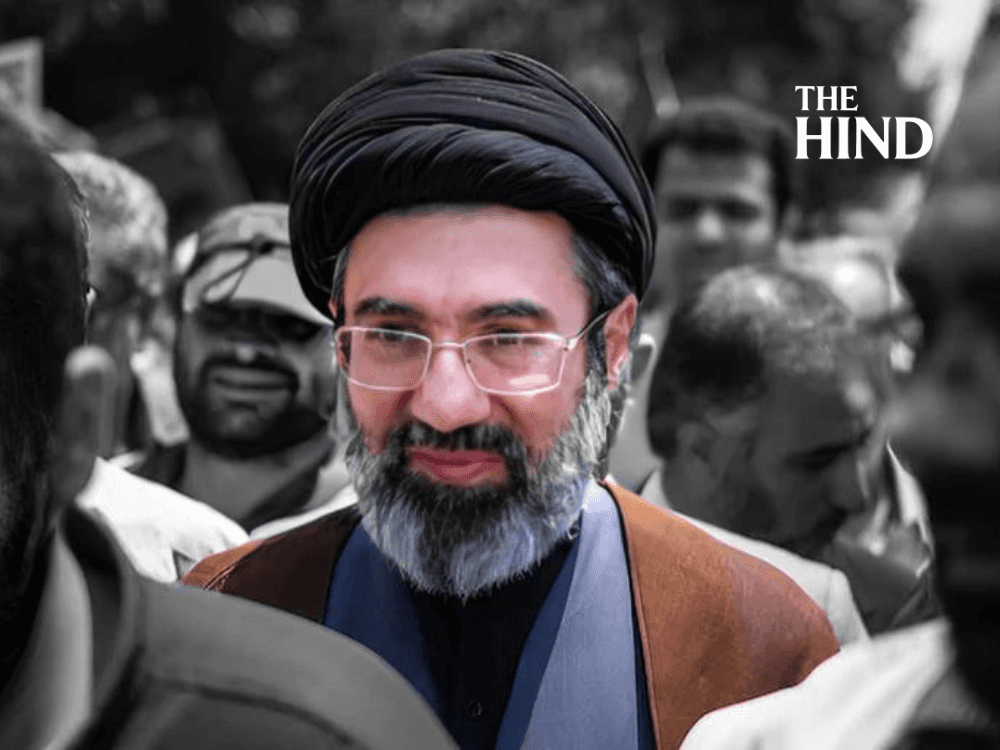
Iran's new Supreme Leader has been chosen in a wartime succession driven by the IRGC — not a clerica...
Mar 5, 2026