Lessons from the Sky: What the Iran War Reveals About India's Air Defence Needs

Mar 5, 2026

In the five days since the United States and Israel launched Operation Epic Fury against Iran, the skies over the Gulf have become the most consequential military laboratory in decades. Hundreds of Iranian ballistic missiles, cruise missiles, and Shahed drones have rained down on Gulf states, US bases, and Israeli cities. Air defence systems that cost billions to procure have been pushed to their operational limits. Interceptor stockpiles have been depleted at speeds that have shocked planners. And the fundamental asymmetry of modern aerial warfare — a $50,000 drone forcing a $4 million Patriot interceptor — has been laid bare for every military establishment in the world to study.
India is watching. And India, given its threat environment, its two nuclear-armed adversaries, and its vast territory, should be drawing urgent lessons.
What the Iran War Has Revealed
The Iran conflict has validated several trends that military analysts had been tracking since Ukraine — and amplified them at a scale and intensity that demands strategic attention.
The first is the saturation problem. Iran's strategy has been to overwhelm air defences not with precision, but with volume. Simultaneous waves of ballistic missiles, cruise missiles, and low-cost Shahed drones force defending systems to track threats across multiple speeds, altitudes, and radar signatures simultaneously. The UAE and Qatar, despite possessing sophisticated Patriot systems and Barak air defence batteries, have reported interception rates of around 94% for ballistic missiles and 92% for drones — impressive figures that still mean dozens of Iranian projectiles struck civilian infrastructure, airports, and oil facilities. A 6% leakage rate in saturation attacks is not a rounding error. It is a strategic vulnerability.
The second is the cost asymmetry problem. Each Iranian Shahed drone costs between $20,000 and $50,000. Each Patriot interceptor used to destroy it costs approximately $4 million and takes months to replace. As one Gulf-based analyst noted, for every dollar Iran spent on drones, defending states spent $20–28 shooting them down. In a sustained conflict, this economics is devastating — and it is exactly the economics that a well-resourced adversary with a large drone arsenal would exploit against India.
The third is the magazine depth problem. Even the United States — the world's most lavishly equipped military — is running low on Patriot interceptors, having expended stocks in Yemen, Iran, and in resupply to Ukraine. The war has exposed what defence planners have been quietly worried about for years: that interceptor production rates are far below what sustained modern warfare demands. India, which operates a multi-layered but finite air defence architecture, must draw the same conclusion about its own stocks.
India's Air Defence Architecture — Strengths and Gaps
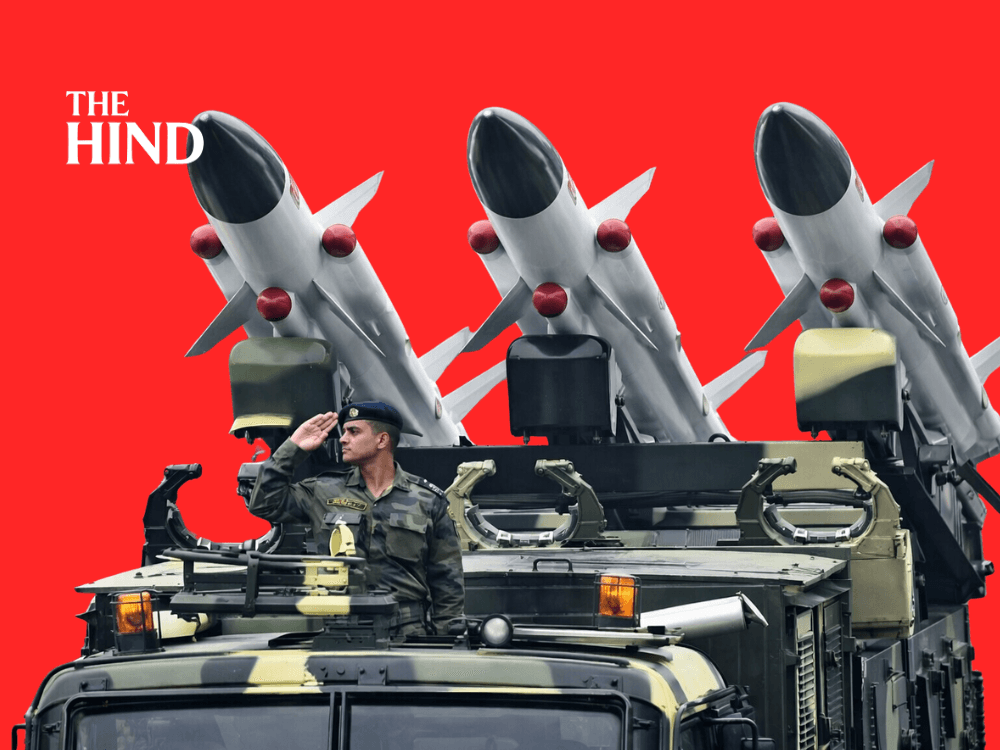
India's air defence system is genuinely multi-layered and has been substantially strengthened over the past decade. Three of five S-400 Sudarshan Chakra regiments are operational, with the remaining two deliveries on track for 2026. The Barak-8 MRSAM system has been inducted across the Indian Army, Navy, and Air Force, providing medium-range coverage up to 70–100 km. The Akashteer automated air defence management system — which proved its worth during Operation Sindoor in May 2025 by integrating disparate radar and sensor data into a single, real-time operational picture — represents a significant leap in command and control capability. India's two-tiered Ballistic Missile Defence programme, covering exo-atmospheric and endo-atmospheric intercepts, provides a degree of ballistic missile protection for priority cities and installations.
These are real capabilities. But the Iran war illuminates three gaps that India must now address with greater urgency.
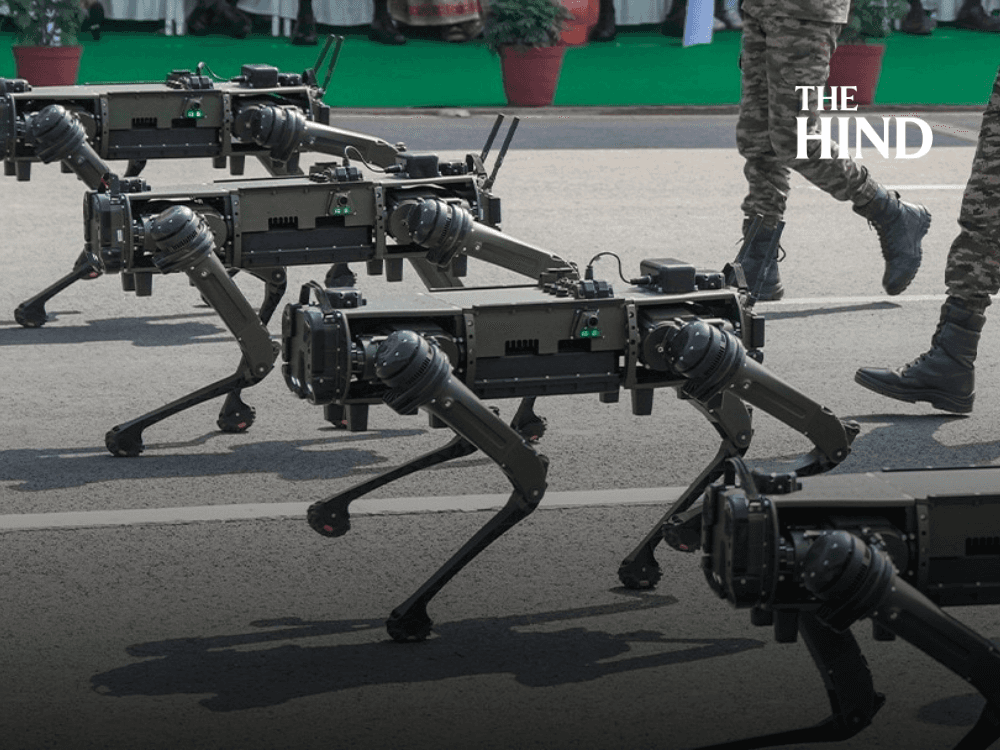
The first is low-altitude drone coverage. The June 2021 drone attack on Jammu Air Force Station — and Pakistan's extensive use of loitering munitions and drones during Operation Sindoor — demonstrated that India's air defence architecture has significant vulnerabilities at low altitudes. Traditional radar systems are not optimised for detecting small, low-radar-cross-section drones. The Jammu attack went undetected for critical minutes. In a conflict featuring the kind of mass drone salvoes Iran has deployed in the Gulf, those minutes matter enormously. The Indian Army and Navy have both issued RFIs in February 2026 for autonomous drone interception systems — an institutional acknowledgment that this gap is real and urgent.
The second is interceptor depth. India's current stocks of Barak-8 and S-400 interceptors are sized for deterrence and limited conflict — not for the kind of sustained, high-volume barrage that Iran has been sustaining for five days against Gulf air defences. The Iran war's lesson on magazine depth is directly applicable. India needs significantly larger interceptor stockpiles, faster domestic production of interceptor missiles, and a clear plan for replenishment under wartime conditions. The ₹2,182 crore contract signed on March 3, 2026 for advanced Shtil surface-to-air missiles for the Indian Navy is a step in the right direction — but the pace of procurement must match the threat.
The third is the hypersonic gap. Both China and Pakistan have invested heavily in hypersonic glide vehicles and manoeuvring re-entry vehicles designed precisely to defeat existing interceptor systems. India's Phase 3 BMD programme — developing the AD-AM and AD-AH interceptors against hypersonic cruise missiles and glide vehicles — is the right response, but first trials are not expected until the early 2030s. That timeline, given the pace of adversary capability development, needs to be compressed wherever technically feasible.
What India Is Building — And What Must Accelerate
The good news is that India is not standing still. Project Kusha — DRDO's indigenous long-range air defence system comparable to the S-400, with three interceptor variants covering 150 km, 250 km, and 350–400 km ranges — completed successful initial missile tests in February 2026. Defence Secretary Rajesh Kumar Singh confirmed the milestone, and the IAF has pressed DRDO to fast-track induction timelines. Phased induction between 2028 and 2030 remains the target, though Operation Sindoor has already prompted a review of whether this can be accelerated.
Mission Sudarshan Chakra — India's overarching initiative to build an AI-enabled, networked, multi-layered air defence architecture integrating all sensors, shooters, cyber assets, and space-based surveillance — is precisely the right doctrinal framework for the kind of multi-domain, saturation threat the Iran war has demonstrated. The Akashteer system is an early building block. The D4 counter-drone system, combining radar, electro-optical sensors, electronic jamming, and directed energy weapons, is being deployed to address low-altitude vulnerabilities. India's successful test of high-energy laser systems in 2025 — making it one of only four countries to demonstrate this capability — points toward cost-effective interception of low-cost drones that breaks the asymmetric cost equation.
India's indigenous Sheshnaag-150 suicide drone programme, drawing lessons directly from Iran's Shahed-136 and the US LUCAS programme, reflects the understanding that in modern warfare, the ability to flood adversary air defences with your own low-cost attritable systems is as important as the ability to defend against theirs.
The Strategic Takeaway
The Iran war has offered India a live, real-time demonstration of what modern aerial warfare looks like at scale. The lessons — saturation tactics, cost asymmetry, magazine depth, the centrality of C3 integration, and the vulnerability of even sophisticated air defences to mass drone attacks — are directly applicable to India's threat environment on both its western and northern borders.
India has the right architecture and the right programmes. Project Kusha, Mission Sudarshan Chakra, the Barak-8 induction, Akashteer, directed energy weapons — these are not paper projects. They are operational systems and advanced programmes being built by a defence ecosystem that has matured significantly over the past decade.
What the Iran war demands is urgency. The pace of acquisition, the scale of interceptor stockpiling, the acceleration of counter-drone deployment, and the compression of Project Kusha's induction timeline — all of these need to be reviewed in light of what the skies over the Gulf are teaching the world right now. India's adversaries are watching the same war and drawing the same lessons. The response must be equally alert.
The Hind covers policy, power, and strategic affairs from India's perspective. Views expressed are analytical and editorial.
Type something …
Search
Latest Post
India holds $495 billion in public sector equity — scattered across twelve ministries, managed by po...
Mar 5, 2026