Beijing's Blueprint: What China's 15th Five-Year Plan Means for India

Mar 5, 2026
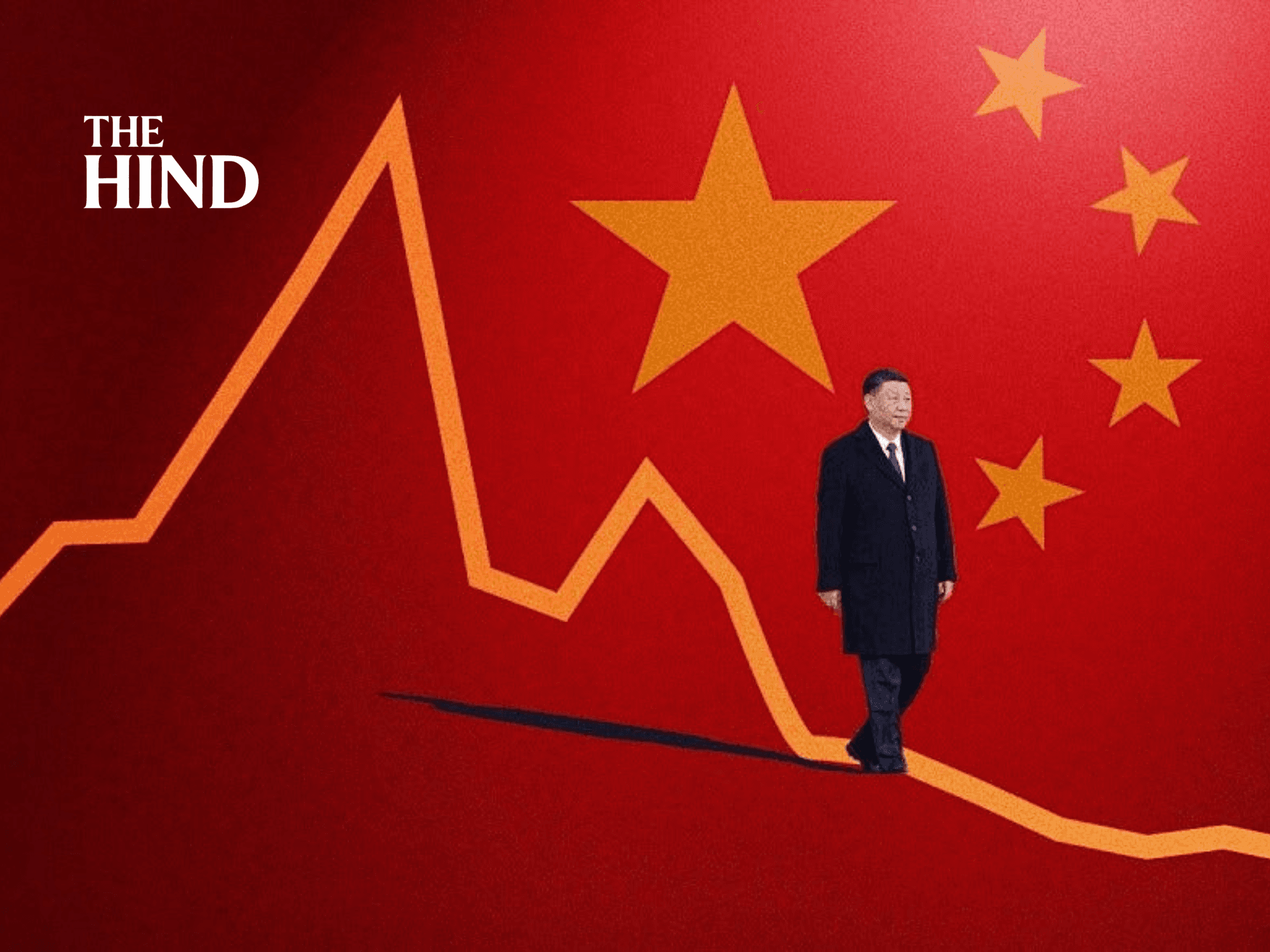
On March 5, 2026, as China's National People's Congress convened in Beijing, Premier Li Qiang unveiled the 15th Five-Year Plan — a 46-page blueprint that will govern the world's second-largest economy through 2030. Set against a backdrop of a lowered growth target of 4.5–5%, the lowest since 1991, and a domestic economy wrestling with property sector stress, weak consumption, and the energy fallout of the Iran war, the plan is a frank acknowledgment that China's era of effortless high growth is over.
But the 15th Five-Year Plan is not a document of retreat. It is a document of recalibration — and for India, reading it carefully is not optional. What Beijing plans to do between 2026 and 2030 will directly shape the competitive landscape that India must navigate in manufacturing, technology, trade, and geopolitical positioning.
What the Plan Actually Says
At its core, the 15th Five-Year Plan is built around a single strategic logic: China can no longer rely on exports and investment to drive growth at the pace it once did, so it must build an economy powered by domestic consumption, indigenous innovation, and technological self-reliance.
The plan places a modernised industrial system — not merely innovation in isolation — at the front of its priorities. The sequencing is deliberate: China wants to turn laboratory breakthroughs into scalable, high-value production capacity. Frontier sectors including AI, semiconductors, quantum computing, robotics, 6G communications, and biotechnology receive concentrated policy and capital support. R&D spending is targeted to exceed 3.2% of GDP — a record — with a focus on overcoming what Beijing calls "chokepoint technologies" where it remains dependent on foreign inputs.
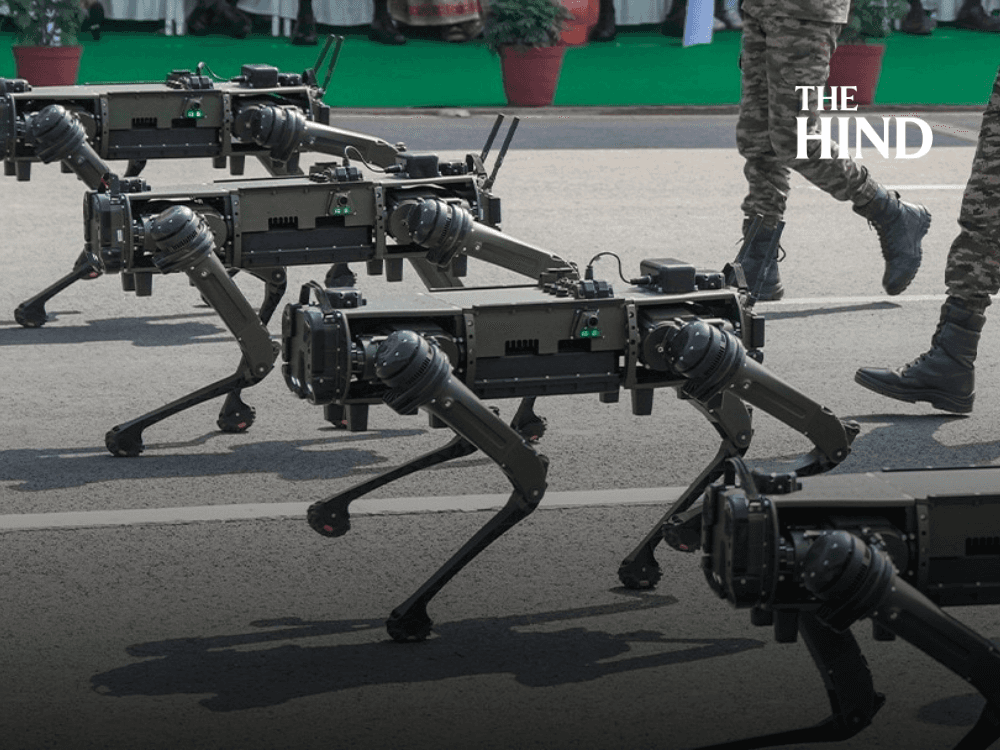
The "AI-Plus" campaign, launched in 2025 and now codified in the plan, signals the large-scale integration of artificial intelligence into China's manufacturing sector. The goal is not merely to develop AI — it is to deploy it at industrial scale, embedding it into production lines, logistics, and supply chain management across the economy. This is a different ambition from the West's approach to AI, and a more immediate competitive challenge for countries like India that are building their own manufacturing base.
On growth, China is being realistic. The 4.5–5% target range gives Beijing flexibility to manage the economy without making unsustainable commitments purely to hit a number. More than two-thirds of China's provinces have already scaled back their own growth targets in parallel. A slower China is still an enormous China — and a China that is restructuring its economy toward higher-value output is a more formidable long-term competitor than one simply expanding by volume.
The Competitive Pressure on India
For India, China's 15th Five-Year Plan creates both headwinds and openings — and it is important to be clear-eyed about both.
The headwinds are real. China's push for technological self-reliance in semiconductors, advanced materials, and industrial machinery directly overlaps with sectors where India is building its own capabilities. As China moves up the value chain — reducing its dependence on foreign inputs while scaling domestic production — it will compete more aggressively in the same markets India is targeting. The plan's explicit goal of achieving over 70% self-sufficiency in "workhorse" chips by 2030 means China's domestic semiconductor ecosystem will mature rapidly, creating competition precisely as India is trying to attract global chipmakers and build its own foundry capacity.
China's industrial scale also continues to define the baseline. It accounts for 25% of global manufacturing value added, handles over 40% of the world's container traffic, and recorded the world's largest-ever trade surplus of $1.19 trillion in 2025. Even a slower-growing China operating at this scale shapes global pricing, supply chains, and investment flows in ways that directly affect India's ability to compete as a manufacturing destination.
The plan's emphasis on redirecting exports to non-Western markets — a response to US tariffs and the Iran war's disruption of China's oil supply chains — means Chinese goods will increasingly flood markets in Asia, Africa, and the Middle East. These are precisely the export markets India is seeking to grow into. Indian manufacturers, particularly in sectors like electronics, textiles, chemicals, and steel, will face intensified price competition from Chinese exporters rerouting away from the United States and Europe.
Where India's Opportunity Lies
Yet the 15th Five-Year Plan also contains within it the conditions for India's strategic opportunity — if New Delhi moves with the right speed and intent.
China's deliberate turn inward creates space. As Beijing consolidates around a "closed-loop" technology ecosystem — banning foreign AI accelerators in state-funded data centres, mandating domestic equipment in chip manufacturing — global companies seeking partners outside China's ecosystem are accelerating their India pivot. The "China+1" strategy is no longer a hesitant hedge. It is becoming structural policy for multinationals in electronics, pharmaceuticals, and advanced manufacturing. India has already emerged as a secondary hub in smartphones and pharma — the 15th Five-Year Plan's protectionist thrust will deepen that shift.
India's growing alignment with the United States and its Quad partners on critical and emerging technologies is now more strategically valuable than ever. As China institutionalises tech decoupling from the West, India's positioning as a trusted technology partner — open to collaboration with American, Japanese, and European firms in semiconductors, AI, and clean energy — gives it a differentiated offer that China's closed-loop model cannot match.
China's property crisis and weak domestic consumption also present an opening in global capital markets. Multinational investors who have spent years diversifying away from China are looking for credible alternatives with large consumer markets, rule of law, and political stability. India, with its 1.4 billion consumers, growing middle class, and improving infrastructure, is the most natural destination for that redirected capital — but only if India continues to improve its investment climate and executes on its manufacturing ambitions with the same urgency Beijing has shown.
India's Response — Building at China's Pace
The most important lesson India can draw from China's 15th Five-Year Plan is not strategic — it is operational. China plans at scale, executes at speed, and holds its targets with institutional consistency across five-year cycles. India's own planning frameworks — the National Infrastructure Pipeline, the Production Linked Incentive scheme, the India Semiconductor Mission — are well-designed. The question is whether India can match China's execution discipline.
India does not need to replicate China's model. Its democracy, its federal structure, its openness to foreign capital — these are genuine advantages, not liabilities. But India does need to internalise the urgency that China's 15th Five-Year Plan represents. Beijing is not coasting. It is restructuring, recalibrating, and competing with the same focused intensity that built its manufacturing dominance in the first place.
The window for India to establish itself as a credible alternative to China in global supply chains — in semiconductors, in clean energy, in advanced manufacturing — is real. But windows do not stay open indefinitely. China's 15th Five-Year Plan is a reminder that the competition is active, well-resourced, and operating on a clear timeline.
India's response must be equally deliberate.
The Hind covers policy, power, and strategic affairs from India's perspective. Views expressed are analytical and editorial.
Type something …
Search
Latest Post

Iran's new Supreme Leader has been chosen in a wartime succession driven by the IRGC — not a clerica...
Mar 5, 2026